Maritime English
Build Confidence in Professional Maritime English
Practical English training for maritime professionals who need to communicate clearly and confidently in an international working environment.
Develop the language skills required for everyday communication on board and ashore — from vessel operations and technical discussions to safety communication, documentation and interaction with international colleagues, clients and partners.
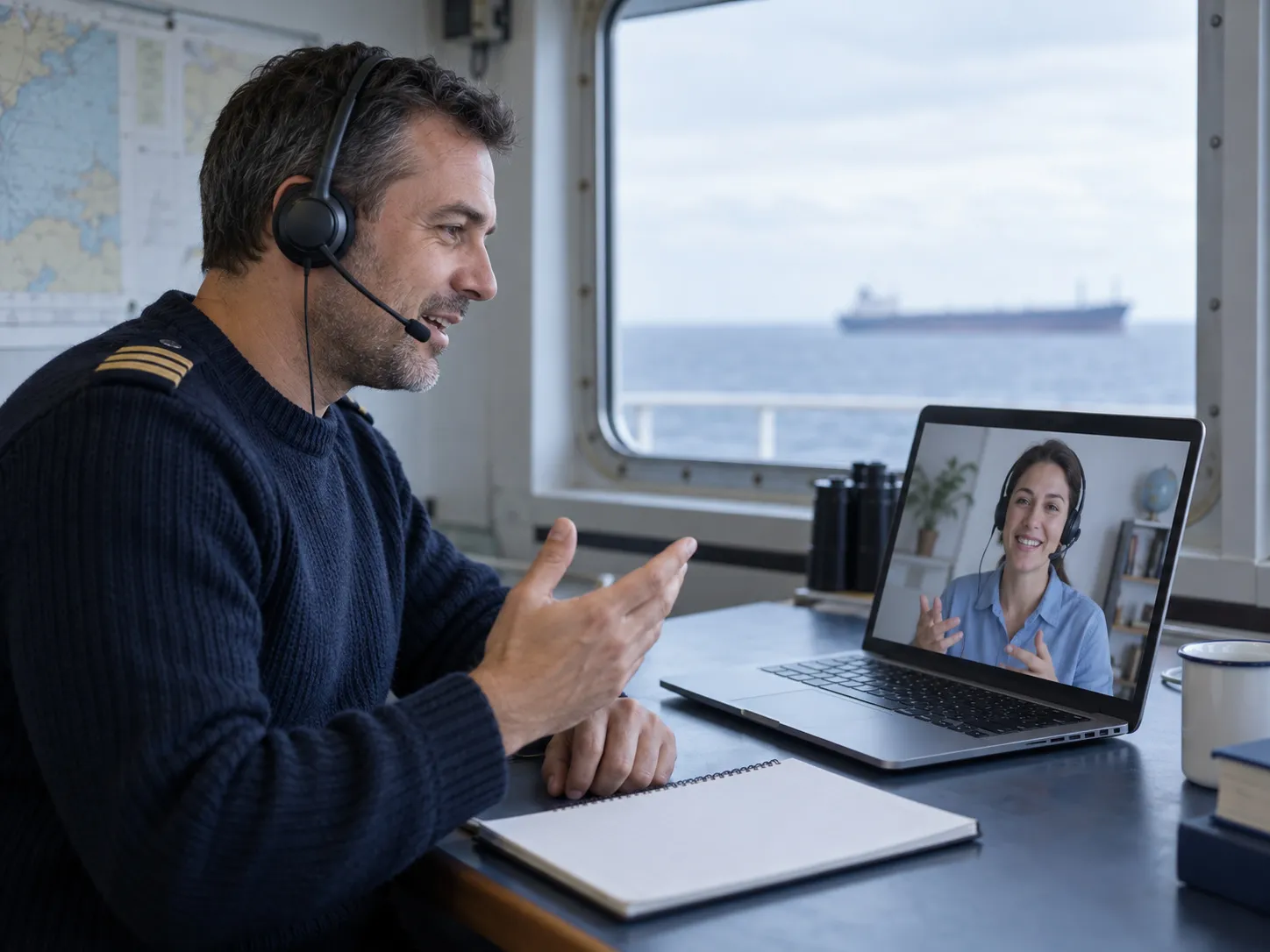
About the Programme
English is the working language of the international maritime industry. Clear communication is essential not only for effective day-to-day operations but also for safety, coordination and decision-making.
Maritime professionals use English in a wide range of situations — communicating between ship and shore, exchanging information with port authorities and agents, discussing technical issues, giving instructions, completing documentation and responding to emergencies.
The Maritime English programme develops practical language skills specifically for this environment.
The programme is built around situations maritime professionals encounter in everyday work rather than general English exercises. Participants develop industry vocabulary, professional communication skills and confidence using English in operational situations, with IMO Standard Marine Communication Phrases (SMCP) forming an important part of the programme.
The course is suitable for both sea-going and shore-based maritime professionals who want to communicate more effectively in an international working environment.
What You Will Learn
By completing the programme, participants will develop their ability to:
- understand and use essential maritime terminology;
- communicate clearly in common shipboard and shore-based situations;
- understand and use IMO Standard Marine Communication Phrases (SMCP);
- communicate during navigation, watchkeeping and port operations;
- describe technical conditions, defects and maintenance requirements;
- understand cargo-related terminology and instructions;
- communicate effectively during safety and emergency situations;
- understand the principles of maritime radio communication;
- read and work with common maritime documents and operational correspondence;
- write clear professional emails, reports and operational updates;
- communicate with multinational crews and international shore-based teams;
- reduce ambiguity and misunderstandings in professional communication.
Who Is This Programme For?
The programme is designed for:
Deck Officers
Maritime professionals who need English for navigation, watchkeeping, port operations, safety communication and interaction with pilots and port authorities.
Engine Officers & Technical Professionals
Professionals who use English to discuss machinery, maintenance, defects, repairs and technical requirements.
Fleet & Vessel Operations Professionals
Operators and operations staff communicating daily with vessels, agents, charterers and international partners.
Crewing, Technical & Procurement Teams
Shore-based maritime professionals who need confident English for communication with vessels, suppliers, service providers and colleagues around the world.
Seafarers Preparing for Shore-Based Careers
Maritime professionals who want to strengthen their professional English before moving into an international shore-based role.
Maritime Career Starters
People preparing to enter the maritime industry who want to develop industry-specific English alongside their professional knowledge.
Modules
Build the language foundation required for everyday work in the maritime industry.
Topics include
- Main parts of a vessel
- Vessel types
- Deck and engine departments
- Shipboard roles and responsibilities
- Ports and terminals
- Maritime equipment
- Directions and positions on board
- Measurements, quantities and units
- Time, dates and schedules
- Essential professional grammar
- Giving and receiving instructions
- Asking for clarification
- Confirming information
Practical case
Describe a vessel, its departments and a routine operational situation using clear maritime terminology.
Outcome
You will build the vocabulary and language structures needed to communicate accurately in common maritime working situations.
Learn the internationally standardised language used to make maritime communication clear, concise and unambiguous.
Topics include
- Introduction to IMO SMCP
- Why standardised communication is used
- Message markers
- Standard orders and responses
- Position, course and speed
- Navigational information
- Ship-to-ship communication
- Ship-to-shore communication
- Pilot and bridge communication
- Safety-related phrases
- Requests, warnings and confirmations
- Avoiding ambiguity
Practical case
Use standard phrases to exchange navigational and operational information between a vessel and an external party.
Outcome
You will understand the principles behind SMCP and learn to use standard phrases in common operational and safety-related situations.
Develop the English used during navigation, watchkeeping and interaction with external maritime services.
Topics include
- Bridge terminology
- Watchkeeping communication
- Helm orders
- Course and speed
- Position reporting
- Navigational warnings
- Traffic situations
- Arrival and departure
- Pilotage
- Master–pilot communication
- Communication with VTS
- Port authority communication
- Berthing and unberthing
- Tug assistance
- Anchoring
Practical case
Handle a simulated arrival at port involving communication between the bridge, pilot, VTS and port services.
Outcome
You will be able to understand and participate more confidently in routine bridge and navigation-related communication.
Develop the vocabulary and communication skills required to discuss machinery, maintenance and technical problems.
Topics include
- Main engine and auxiliary machinery
- Pumps, valves and piping
- Electrical systems
- Fuel and lubrication systems
- Machinery condition
- Measurements and parameters
- Maintenance terminology
- Planned maintenance
- Describing faults and defects
- Troubleshooting language
- Spare parts
- Repair requirements
- Technical reporting
- Communication between vessel and shore technical teams
Practical case
Describe a machinery problem, explain its operational impact and prepare a short technical update for the shore-based team.
Outcome
You will be able to describe technical conditions and problems more accurately and understand common technical communication used between vessels and shore-based teams.
Learn the English used during cargo operations and when working with common shipping documents.
Topics include
- Cargo types
- Loading and discharging
- Cargo quantities
- Stowage
- Cargo condition
- Terminal communication
- Cargo instructions
- Operational sequences
- Delays and interruptions
- Bills of Lading
- Cargo manifests
- Statements of Facts
- Notices and operational documentation
- Reporting discrepancies
- Communicating cargo-related problems
Practical case
Review cargo instructions and communicate an operational issue arising during loading or discharge.
Outcome
You will understand essential cargo terminology and communicate more effectively during cargo operations and related documentation processes.
Develop the language required when communication needs to be especially clear, fast and accurate.
Topics include
- Safety terminology
- Safety briefings
- Toolbox talks
- Personal protective equipment
- Emergency drills
- Fire
- Collision
- Grounding
- Flooding
- Man overboard
- Medical emergencies
- Abandon ship
- Pollution incidents
- Distress communication
- Emergency instructions
- ISPS and security terminology
- Reporting incidents
Practical case
Respond to a simulated emergency, communicate the situation and provide clear information to the relevant parties.
Outcome
You will be able to understand and use essential English for safety, emergency and security situations where clear communication is critical.
Understand the structure and language of professional maritime radio communication.
Topics include
- Principles of maritime radio communication
- VHF terminology
- Calling procedures
- Establishing communication
- Identifying vessels and stations
- Channel communication
- Standard radio vocabulary
- Spelling alphabet
- Numbers and positions
- Distress communication
- MAYDAY
- Urgency communication
- PAN PAN
- Safety communication
- SÉCURITÉ
- GMDSS fundamentals
- Closing and confirming communication
Practical case
Complete several simulated VHF exchanges, including routine communication and an emergency message.
Outcome
You will understand the basic structure of maritime radio exchanges and communicate information in a clear and standardised format.
Learn to communicate effectively with people from different professional and cultural backgrounds.
Topics include
- Multinational crews
- Different accents and communication styles
- Clear and simple professional English
- Asking for clarification
- Confirming understanding
- Giving instructions
- Receiving feedback
- Disagreement and problem solving
- Professional etiquette
- Communicating under pressure
- Team communication
- Leadership communication
- Avoiding misunderstandings
- Building confidence when speaking English
Practical case
Resolve a workplace misunderstanding between colleagues from different linguistic backgrounds while keeping communication clear and professional.
Outcome
You will communicate more confidently within multinational teams and learn practical techniques for reducing misunderstandings.
Develop the English required for everyday communication between vessels, shipping companies and international partners.
Topics include
- Professional maritime emails
- Requests and confirmations
- Operational updates
- Vessel status reports
- Communicating delays
- Technical correspondence
- Communication with agents
- Communication with charterers and clients
- Telephone and online meetings
- Explaining problems
- Requesting action
- Following up
- Escalating an issue
- Professional tone and clarity
Practical case
Prepare an operational email explaining a vessel delay and the actions being taken to several international stakeholders.
Outcome
You will be able to communicate more clearly and professionally in the written and spoken situations common to shore-based maritime work.
At the end of the programme, participants complete a practical communication scenario combining the language skills covered throughout the course.
You are working in an international maritime environment and need to manage a developing operational situation involving a vessel, shore-based colleagues and external parties.
Your task is to
- understand the operational information provided;
- identify the key information that needs to be communicated;
- communicate with the vessel or shore-based team;
- use appropriate maritime terminology;
- clarify and confirm critical information;
- prepare a professional written update;
- respond to a change in the situation;
- communicate clearly under time pressure.
The case brings together maritime vocabulary, operational communication, professional writing and the principles of clear and unambiguous communication.
Skills You Will Gain
After completing the programme, you will develop practical skills in:
Maritime Vocabulary
Using professional terminology accurately in everyday maritime situations.
SMCP Communication
Understanding and applying standardised maritime phrases where clear and unambiguous communication is required.
Operational English
Communicating during voyages, port calls, cargo operations and other everyday vessel activities.
Technical English
Describing machinery, technical conditions, defects and maintenance requirements.
Safety & Emergency Communication
Using clear and structured language when responding to safety-critical situations.
Professional Writing
Preparing emails, reports and operational updates for international colleagues and partners.
Ship-to-Shore Communication
Exchanging information effectively between vessels and shore-based teams.
Multicultural Communication
Working confidently with colleagues from different linguistic and cultural backgrounds.
Disclaimer: This educational programme is intended for professional development purposes only. Any certificate issued confirms completion of the programme and does not constitute a formal professional qualification, accreditation, or licence.
Programme
- Start
- 5 April 2026
- Duration
- 5 weeks
- Format
- Online
- Language
- English
- Level
- All grades
Included
- 9 modules and a final practical case
- Real cases, workflows and documents
- Learn at your own pace
- Support from a curator
- Access to a practitioner-methodologist
Apply for the programme
Maritime English · starts 5 April 2026. Applications are reviewed in order of receipt.
- Online, at your own pace
- Payment terms sent with the confirmation
- Level check before enrolment, not an exam